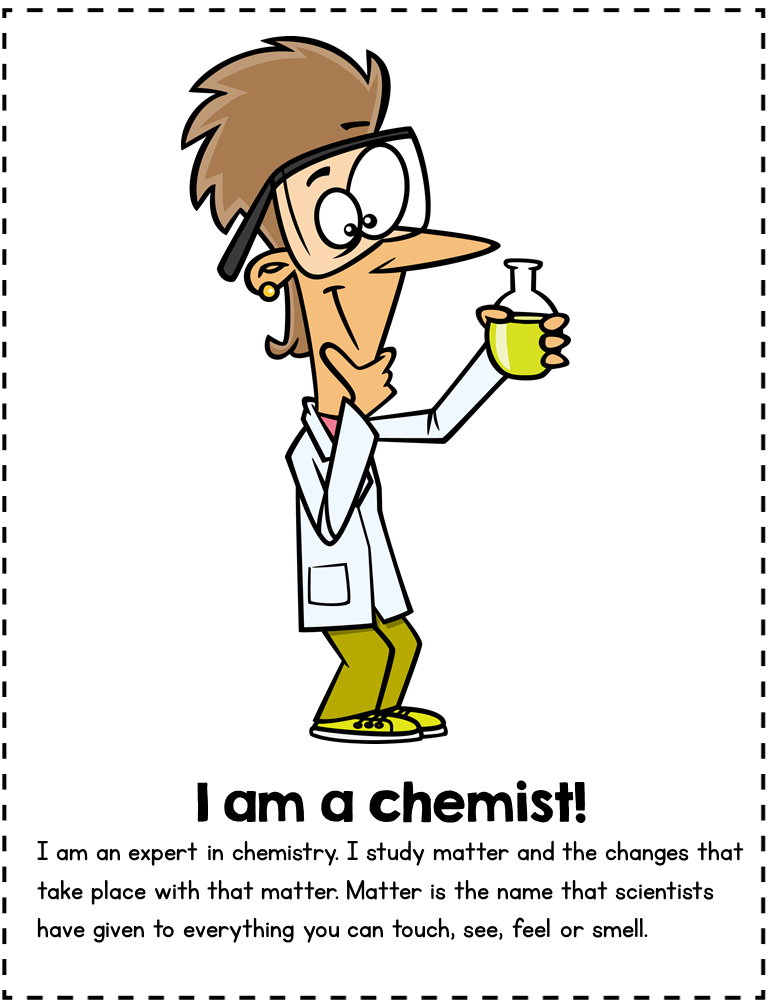
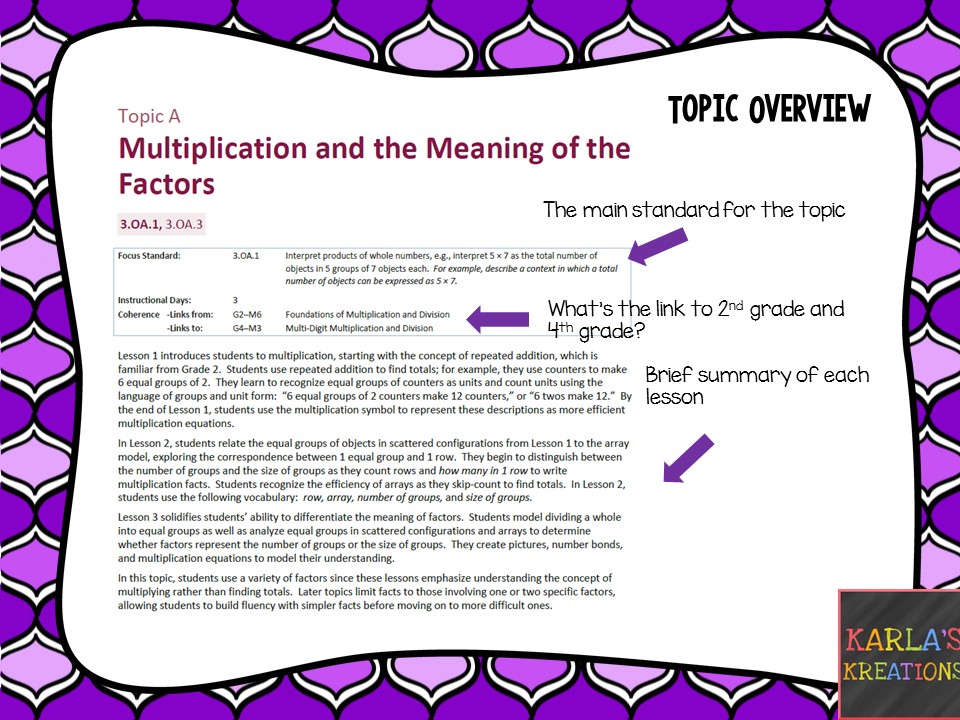
I have been working VERY hard to recreate the black and white think like a disciplinarian (TLAD) pictures our GT trainer gave us. I've been searching TpT for the perfect clip art and I finally have a set that I am very happy with. I want to give a HUGE thank you to Ron Leishman at Digital Toonage for helping me! He's amazing. I sent him a message asking for some specific fields like entrepreneur, statistician, historian and physicist and he did an AMAZING job! I highly recommend his work to anyone and he's super accommodating! These poster have two versions- one with a small paragraph explaining the field and one without. Print them on cardstock and laminate and you will be able to use them in so many different ways. Teaching just math last year, I was not able to use them as much as I wanted to but each time we did a PBL, I was able to incorporate disciplinarian work. For example, in the fall when we did a project about designing a fall festival students learned about entrepreneurs, graphic designers, sociologists and environmentalists. Throughout the project, each of those disciplinarians had specific things that were relevant to them. The entrepreneur was concerned about choosing booths that made the most profit. The environmentalist was concerned about booths that adversely affected the environment. The graphic designer was concerned about making the best logo and brochure. And the sociologist was interested in setting up the festival so there was enough time and space for human interactions. Another project I did at the end of the year- the classroom makeover- also incorporated TLAD. I will describe that more in an additional post.
My ELA teammate used disciplinarians when reading novels with students. She had students thinking like a veterinarian while reading Because of Winn Dixie and thinking like an engineer when reading City of Ember. There are SO many uses for thinking like a disciplinarian! Here are a few samples from my product. Here's a link to the product here
Sunday, June 3, 2018
Thursday, May 31, 2018
Scholarly Behaviors
I have a new job- I am the gifted specialist for a school in my district. I am beyond excited to begin this new journey. In preparation for my new job, I am taking another look at my Scholarly Behavior posters I made last year. I added some captions for each poster and finally uploaded them to TpT. You can find them here. These scholarly behaviors are based on the work of Dr. Sandra Kaplan. These are eleven different traits/skills that scholars should have or be able to do:
- Academic humility
- Intellectual risk-taking
- Academic Preparation
- Ponder Ideas
- Intellectual curiosity
- Save and organize ideas
- Exercise Intellect
- Goal-setting
- Perseverance in learning
- Use many and varied resources
- Multiple perspectives
Last year I used them in my 4th grade math classroom a lot. At the beginning of the year, I introduced the behaviors from the very beginning. The first day of school I asked my students to complete a sheet that looked like this:
I asked students to think about the math with which they already feel confident. I wanted them to write those concepts in the glass. Then around the side I asked student to write down things they want to learn this year in math- expressing their intellectual curiosity.
We were departmentalized this past year in 4th grade and it was important that student knew what materials they needed for each class. We created this organizer to help them the first week. In each class, students wrote down the subject and what materials were needed for that specific class.
Another way I introduced the behaviors was by graphing pre-test data and talking about the behavior of goal-setting.
I also used Save and Organize Ideas when we set up interactive notebooks.
Throughout the year we referred to these scholarly behaviors a lot in all subject areas. My language arts teammate would refer to these behaviors when discussing how characters acted in certain stories or how famous people reacted to events in their lives when reading biographies. In all our classrooms, these posters hung in prominent locations and students referred to them often. Here are some sample pictures from the product.
The set comes with four different choices- 2 font styles and then within both font styles there are posters with a caption and without a caption.
Saturday, January 28, 2017
Chocolate Hearts
Chocolate Hearts from karla heleotes on Vimeo.
What do you notice?
What do you wonder?
Main Question: How many chocolates are left?
What's an estimate that is too high?
What's an estimate that is too low?
What's a reasonable estimate?
Act 2:
What information do we need to solve this?
The total number of chocolates
The number of each type of chocolate that was eaten
Act 3:
What strategies did you use to solve this?
How close was the answer to your estimate?
13 chocolates are left.
The Heart Jar: A Valetine 3-Act Task
Act 1
The Heart Jar Act 1 from karla heleotes on Vimeo.
What do you notice?
What do you wonder?
How many hearts fit into the jar?
What's an estimate that is too high?
What's an estimate that is too low?
What's a reasonable estimate?
Act 2
What information do you need to solve this?
Act 3
What strategies did you use to solve this problem? How close was the answer to your estimate?
The Heart Jar Act 1 from karla heleotes on Vimeo.
What do you notice?
What do you wonder?
How many hearts fit into the jar?
What's an estimate that is too high?
What's an estimate that is too low?
What's a reasonable estimate?
Act 2
What information do you need to solve this?
![]() |
| These are the number of candies in one box. |
![]() |
| Six full boxes were used. |
![]() |
| Some candies from the seventh box were used. These are the leftovers. |
Act 3
What strategies did you use to solve this problem? How close was the answer to your estimate?
My First 3-Act Task
I've loved going into classrooms and modeling 3-act tasks. Graham Fletcher has some amazing 3-act tasks on his website. https://gfletchy.com/3-act-lessons/
But I felt like it was time to try my hand at it and make a few of my own. Since Valentine's Day is coming up soon, I decided that this was the perfect theme for the 3-act tasks I would create.
Disclaimer: Please be kind- these as my first attempts...
Sharing Hearts
Act 1
Watch the video.
Sharing Hearts from karla heleotes on Vimeo.
What do you notice? What do you wonder?
If they share evenly, how many hearts will each student receive?
What's an estimate that is too high? What's an estimate that's too low? What would be a reasonable estimate?
Act 2

What strategies did you use to solve this?
Sharing Hearts from karla heleotes on Vimeo.
How close was your estimate to the actual answer?
But I felt like it was time to try my hand at it and make a few of my own. Since Valentine's Day is coming up soon, I decided that this was the perfect theme for the 3-act tasks I would create.
Disclaimer: Please be kind- these as my first attempts...
Sharing Hearts
Act 1
Watch the video.
Sharing Hearts from karla heleotes on Vimeo.
What do you notice? What do you wonder?
If they share evenly, how many hearts will each student receive?
What's an estimate that is too high? What's an estimate that's too low? What would be a reasonable estimate?
Act 2

There are 2 girls sharing.
Act 3
What strategies did you use to solve this?
Sharing Hearts from karla heleotes on Vimeo.
How close was your estimate to the actual answer?
Thursday, July 7, 2016
The Power of Mistakes in Math
I am reading this amazing book by Jo Boaler called Mathematical Mindsets.
In it she references Carol Dweck's research on growth mindset and takes it a step further to make some needed connections to math teaching and learning in the United States and Great Britain. She discusses some work by psychologist Jason Moser. He studied the neural mechanisms that operate in people's brains when they make mistakes. He stated that there are two possible responses in the brain when we make a mistake. The first is called an ERN response which is an increased electrical activity when the brain has conflict between a correct response and an error. This brain activity occurs whether or not a person knows they have made a mistake. The second response, called a Pe, is a brain signal when we know we've made a mistake. It happens when we know we've made the mistake and we pay attention to the error. Moser's study is interesting because it shows that we don't even have to be aware that we've made a mistake for brain sparks to occur. Moser concluded two interesting things. First, they found that students' brains reacted with greater ERN and Pe responses when they made mistakes than when their answers were correct. Second, they found that brain activity was greater following a mistake for students who had a growth mindset compared to those with a more fixed mindset. Those people with growth mindsets had a greater awareness of their errors were more likely to go back and correct errors. So, there was a greater chance with these people that more brain sparks were likely to occur.
All this brain research is interesting, but what can we do in our classrooms to change the way children feel about making mistakes? Historically, math has always been so focused on getting the correct answer that it is hard to change our way of thinking about wrong answers. We really need to do things in our classroom to change that message. There's a great idea in the book about a teacher who starts math class by asking students to crumble up a piece of paper. Then students throw it at the board thinking about the feeling they had when they have made mistakes in math. Then students get their papers back, smooth them out and trace all the crumple lines with markers. The teacher explains that the crumple lines all represent brain growth that we experience when we make mistakes. Then the students keep these papers in a math folder or notebook.
Another idea referenced in the book is something called "My favorite mistake." When students are solving problems in math, choose a wrong answer that has a lot of right things in it, but there's just one little conceptual mistake. Share that with the class and focus on all the right things in the answer. Then focus on the mistake and how students can learn from it. There's a great video from the Learning Channel called "My Favorite No" where an middle school math teacher does something like this. Doing things like this can start to change our students' thinking about mistakes.
I hope that these two ideas are things that you might be able to use with your own students. Stay tuned- I will share a lot more ideas and insights from this amazing book.
In it she references Carol Dweck's research on growth mindset and takes it a step further to make some needed connections to math teaching and learning in the United States and Great Britain. She discusses some work by psychologist Jason Moser. He studied the neural mechanisms that operate in people's brains when they make mistakes. He stated that there are two possible responses in the brain when we make a mistake. The first is called an ERN response which is an increased electrical activity when the brain has conflict between a correct response and an error. This brain activity occurs whether or not a person knows they have made a mistake. The second response, called a Pe, is a brain signal when we know we've made a mistake. It happens when we know we've made the mistake and we pay attention to the error. Moser's study is interesting because it shows that we don't even have to be aware that we've made a mistake for brain sparks to occur. Moser concluded two interesting things. First, they found that students' brains reacted with greater ERN and Pe responses when they made mistakes than when their answers were correct. Second, they found that brain activity was greater following a mistake for students who had a growth mindset compared to those with a more fixed mindset. Those people with growth mindsets had a greater awareness of their errors were more likely to go back and correct errors. So, there was a greater chance with these people that more brain sparks were likely to occur.
All this brain research is interesting, but what can we do in our classrooms to change the way children feel about making mistakes? Historically, math has always been so focused on getting the correct answer that it is hard to change our way of thinking about wrong answers. We really need to do things in our classroom to change that message. There's a great idea in the book about a teacher who starts math class by asking students to crumble up a piece of paper. Then students throw it at the board thinking about the feeling they had when they have made mistakes in math. Then students get their papers back, smooth them out and trace all the crumple lines with markers. The teacher explains that the crumple lines all represent brain growth that we experience when we make mistakes. Then the students keep these papers in a math folder or notebook.
Another idea referenced in the book is something called "My favorite mistake." When students are solving problems in math, choose a wrong answer that has a lot of right things in it, but there's just one little conceptual mistake. Share that with the class and focus on all the right things in the answer. Then focus on the mistake and how students can learn from it. There's a great video from the Learning Channel called "My Favorite No" where an middle school math teacher does something like this. Doing things like this can start to change our students' thinking about mistakes.
I hope that these two ideas are things that you might be able to use with your own students. Stay tuned- I will share a lot more ideas and insights from this amazing book.
Wednesday, July 6, 2016
Number Talk Accountability
You know how it is- you are doing an amazing number talk with your students. They are sharing all sorts of interesting mental math ways to solve the problems and you think, "This is good!" Then you realize that you only have maybe half of your students (and somedays that is a high estimate) really engaged in the process. The rest, and in my case, it is usually my lower kiddos are really not engaged or paying attention to the strategies. Either they are lost because the strategies are beyond their realm of thinking at the time or they just are not engaged. What can you really do and still maintain the structure and purpose of the number talk?
One quick fix is to prepare a set of double sided cards. You choose the colors- mine are blue and green. I used leftover cardstock and I cut 3 x 5 inch cards out of the cardstock and glued them together so I have blue on one side and green on the other. Then, I laminated them. At the start of the number talk, I give the cards to the students. I explain that they start with the cards in their laps. When they know the answer, they place the card on their desk- they can choose which side is up. If it's blue, that means they have an answer, but they don't want to share. If the card is green, they have an answer and they are willing to share their strategy. This is a quick way to make students accountable, and it makes it easy for you to choose someone to share.
Another way to make students accountable is to ask them at the end of the number talk to use finger signals to indicate the most efficient strategy. After students have shared their strategies (and you've numbered them) ask students to choose which strategy they think is most efficient. By doing this you can informally see where the students are in their thinking and can plan accordingly with additional number talks.
A third way to provide some accountability is to hold small-group number talks throughout the week. You can easily add a quick number talk to your small group math instruction. And, holding the number talk in a small group allows you to really hone in on particular skills that certain students need.
Class anchor charts explaining different strategies is another great way to hold students accountable. When you make the strategies visible in the classroom, it provides a great reference for the students and holds them accountable because the information is right there on the wall!
Another way to hold students accountable for the strategies they are learning in number talks is by asking them to solve an exit ticket problem. Give students an index card or half-sheet of paper. Pose a problem that will require them to use the strategies you've been working on. Ask students to use one side of the paper to solve the computation using a strategy that was shared during number talks. On the other side of the paper, they can solve it with their choice of strategy. Doing this give you a quick look at individuals and their understandings and misconceptions. It also helps you choose the next direction you want to go with further number talks. But, don't use these as a grade- simply use the information gathered to guide your instruction.
One quick fix is to prepare a set of double sided cards. You choose the colors- mine are blue and green. I used leftover cardstock and I cut 3 x 5 inch cards out of the cardstock and glued them together so I have blue on one side and green on the other. Then, I laminated them. At the start of the number talk, I give the cards to the students. I explain that they start with the cards in their laps. When they know the answer, they place the card on their desk- they can choose which side is up. If it's blue, that means they have an answer, but they don't want to share. If the card is green, they have an answer and they are willing to share their strategy. This is a quick way to make students accountable, and it makes it easy for you to choose someone to share.
Another way to make students accountable is to ask them at the end of the number talk to use finger signals to indicate the most efficient strategy. After students have shared their strategies (and you've numbered them) ask students to choose which strategy they think is most efficient. By doing this you can informally see where the students are in their thinking and can plan accordingly with additional number talks.
A third way to provide some accountability is to hold small-group number talks throughout the week. You can easily add a quick number talk to your small group math instruction. And, holding the number talk in a small group allows you to really hone in on particular skills that certain students need.
Class anchor charts explaining different strategies is another great way to hold students accountable. When you make the strategies visible in the classroom, it provides a great reference for the students and holds them accountable because the information is right there on the wall!
Another way to hold students accountable for the strategies they are learning in number talks is by asking them to solve an exit ticket problem. Give students an index card or half-sheet of paper. Pose a problem that will require them to use the strategies you've been working on. Ask students to use one side of the paper to solve the computation using a strategy that was shared during number talks. On the other side of the paper, they can solve it with their choice of strategy. Doing this give you a quick look at individuals and their understandings and misconceptions. It also helps you choose the next direction you want to go with further number talks. But, don't use these as a grade- simply use the information gathered to guide your instruction.
Saturday, July 2, 2016
Engage New York Training
I am starting a new job in a few days. I will be the K-6 instructional coach for math in my district. I will wear a lot of hats, but one of my favorite will be to plan professional development for the different schools. This is one of the things I am most excited about because I will have some say in the topics of professional development and I know what I don't like about PD and I can try to provide better training for teachers!
One of the biggest pet peeves I have is when we start a program and the district just gives us the materials and expects us to figure it our ourselves. This happened two years ago when we were given the Eureka math materials. We were told that this wasn't our adopted curriculum but we should use it. But, they didn't give us any training on it AT ALL!
Anyone who has used the materials knows that it is not the most user friendly program ever written. It is very wordy and hard to sift through all the script-like lessons to get to the meat of the lesson.
And, when you are given the materials a couple of weeks before school starts there's really no time to investigate the Eureka websites and find all the resources that are there that help explain the program.
So, for the last couple of years teachers have been wading through it-teaching it the best they can. But this past year when I had 3 new teachers on my team- all unfamiliar with the ENY/Eureka materials I truly realized how much we needed some professional development! And, fortunately, I am just the math coach for the job!
I went on a quest for information- I visited the Eureka website and watched hours and hours of videos and sifted through a lot of information. I've created, what I think, is a pretty good professional development training on how to plan for a ENY/Eureka lesson. I know sharing the PowerPoint is not the same as being in a training, but if you're struggling with how to sift through all the words and script of the lesson, I think this might help a little. Check out the slides and then, if you're interested, click on the link. How to Plan a ENY/Eureka Lesson
Monday, July 27, 2015
First Day of School
Today is the beginning of my 22nd year of teaching. It's hard to believe I've been doing it this long! Wow! And, I still get super nervous and can't sleep. I am writing this at 3:35 am. I am excited about a new year, new challenges, a practically all new team! I can't wait to get to know my students! I have a teacher candidate (student teacher) from Arizona State University all year and that will be amazing! But also scary and weird and I really hope I do a good job mentoring her.
Everything is ready in the classroom- copies are made, anchor charts are started, supplies students brought at Meet the Teacher are organized. It's always such chaos that first half an hour when they have all these amazing school supplies and you are trying to get them put away and organized and they are so eager to use these supplies.
It's always so nerve-wracking and then you get into the classroom with the 25 new faces and you forget about all your nervousness and worries and it just begins to click...
Here's a picture of my amazing team- only two of us remained from last year. That's also exciting too for me this year- to rebuild a team that was seriously broken last year. Our theme for the school year is "Building a Foundation for Learning."
Everything is ready in the classroom- copies are made, anchor charts are started, supplies students brought at Meet the Teacher are organized. It's always such chaos that first half an hour when they have all these amazing school supplies and you are trying to get them put away and organized and they are so eager to use these supplies.
It's always so nerve-wracking and then you get into the classroom with the 25 new faces and you forget about all your nervousness and worries and it just begins to click...
Here's a picture of my amazing team- only two of us remained from last year. That's also exciting too for me this year- to rebuild a team that was seriously broken last year. Our theme for the school year is "Building a Foundation for Learning."
Wednesday, July 15, 2015
Another DIY Project
Wow, did I get crafty the last couple of days... Yesterday I made this board.
It's the same kind of things as yesterday's Dry Erase adhesive, but this one is Chalkboard adhesive. This is the inside of my classroom door. I put it there because I am going to use it to write notes to the students and have the students write notes to each other. But not just randomly. I think I am going to have someone have a specific job for the week- I might call it the "Affirmer." This person's job would be to be observant during the day and notice something that someone did that showed good character or hard work or perseverance during the day. Maybe it's someone who tried really hard to answer a tough question. Or it's someone who worked without giving up on a difficult math word problem. The person whose job it is would write a little note to that person on the board saying what they say them do. It could be like a "Caught you being good!" thing. I think the students will really like it. My teacher candidate (student teacher) and I will model it at first and then slowly release that job to the students. We'll see how it goes! And, the students get to use cool chalk markers!!!
Tuesday, July 14, 2015
DIY White Board Cabinet
I am not crafty... not much that I plan to do actually works and turns out cute. But, I think today at school I had a minor turning point. I bought this Duck Adhesive white board roll at Walmart.
My original intention was to cut pieces of it and place it near the top of student desks to create an automatic white board that students can use mostly for our Engage New York Math. But, I have this gray cabinet in my room that is just dying for me to do something with. So, I decided to cover the cabinet with this adhesive white board roll. Then I added some cute ribbon to the outside mostly because it's not wide enough to cover the whole door. I also did the other side, but ran out of ribbon and have to go get some more.
I plan on using this as a Daily 5 station- probably a word work activity of some kind, but it's also a neat place to write notes to students. I think it's cute!
Monday, July 13, 2015
Dysfunctional Teams
Grade level teams have changed a lot since I began teaching twenty-two year ago. Way back in the early 90s, being a team meant very little. My first year I barely spoke to the people on my team. We had a common prep time and occasionally I would stop by to ask questions, but collaboration was really out of the question. We didn't really share idea and we didn't discuss common formative assessments. We taught the same grade level, but there was very little going on in our classrooms that came from collaborative conversations about curriculum or data analysis.
As the years went along, I worked on teams with people I would consider friends. We worked well together, but looking back on it, I am sure we excluded the other members of our team because we were friends and they were just grade level colleagues. But, it didn't really matter because working on a team didn't mean what it means now. Being on a grade level team just didn't mean the same thing back then. In some ways, it was nice because we all had the "I can close my door and just teach" mentality. We didn't have to think beyond our 4 walls and our 25+ students. And, it really didn't matter that I didn't like Mr. Sanchez and thought he was an idiot. Or, it didn't matter that Mrs. Iniguez didn't share her lesson on place value- I didn't expect her to. Those were the days of grade level teams without the expectation of working as a team.
Now, our expectations are very different. We are expected to "collaborate" and act as a professional learning community. Over the last several years, our version of a team has changed drastically. And, we have teachers who've been around a while who have seen the shift and aren't very keen on it. We have new teachers coming straight out of college that haven't worked on teams before and have no idea how it all works. There's a lot of interpersonal dynamics that go into functioning as a cohesive team. And, last year happened to be the WORST team I've ever been a part of.
To begin, I have to give a little back story. I had been teaching kindergarten and was feeling it was time to move on. I had taught 3rd grade several times many years ago in my previous district and loved that age group. So, innocently, I went to my administration and asked them if they would consider placing me in 3rd grade. I explained my reasons and expressed willingness to deal with all the stressful, high stakes issues surrounding 3rd grade. They seemed willing and told me they would let me know in a few days.
Fast forward a little bit- unbeknownst to me, there was a student teacher who the rest of the grade level wanted for that position. Also, a former teammate of mine was spreading rumors to the current 3rd grade team about me (our previous team of which we were both a part had had issues that involved administration mediation, hurt feelings, misunderstandings and general dislike). But, I didn't know any of that- had I known it, I probably would still be in Kindergarten.
So, I was given the 3rd grade position. Before the school year even started I had a heart-to-heart with the one teacher who was really good friends with the one who was spreading rumors about me. She has heard the other teacher's side of our conflict and made judgments before hearing my side of the story- which I didn't really share because I didn't think it was any of her business. I reminded her that there are three sides to the story- this teacher's version, my version, and somewhere in the middle was the truth. I really thought we had worked through the issues and we could work together. Boy, was I wrong.
Needless to say, it was a difficult year. There were 5 of us. One, experienced "I've been teaching the same grade level for 15 years" teacher. She's the one that I had the heart-to-heart with- let's call her K. Then there were two young, second year teachers- B, who had student taught with K and was very close to her, and L, who taught 4th grade the year before and was new to the team like I was. Then, there was another teacher, M, who was our team lead and data queen. Let's just say that mistakes were made by all and we were seriously dysfunctional. There was a trust issue. There was an issue with being responsible for getting assigned tasks done. There was an interpersonal issue with me and K. There was an interpersonal issue with M and K. There was conflict and issues with M and B. B and L were really good friends because they were young and, sometimes it seemed like L was more interested in socializing than teaching. L thought she didn't have a voice in meetings. K was never prepared. We ate together as a team for about a month- then I stopped eating with them. Later, I joined them again, but B, L, and K stopped eating with us. I had to take over as team lead because of issues B, L and K had with M. Our team meetings were seriously dysfunctional- nothing got accomplished and it was frustrating every time we met together. And, to make it worse, everyone on the team was venting to their friends on different grade levels about how dysfunctional we were. Serious mistakes were made by all parties and our administration sometimes helped and sometimes added fuel to the fire.
Fast forward to the end of the year- K is moving down to teach 2nd grade, L is moving to 1st grade, B is leaving teaching to go flip houses and M and I are left needing three new teammates. Honestly, we are beyond happy because those people moved on and we can interview and choose people that we feel would be a good fit. We hire three amazing teachers and we've been planning together all summer. I think it's going to be an amazing year- I am cautiously optimistic about the year. So, when I heard this book The Five Dysfunctions of a Team by Patrick Lencioni referenced in a leadership meeting I knew I needed to read this book.
It is written as a parable about this imaginary company that's not doing well. This person is hired to come in and fix the team problems she sees. Through the story, which is an easy read and very relatable to education even though it's written from a business perspective, she explains the five dysfunctions of a team and how to mend those dysfunctions.
As I am reading this book, I see so many ways that this model completely matched our team this last year...
It's a pyramid model and the author says that even though there are five distinct areas that can be isolated, they usually are interrelated.
The bottom of the pyramid, and the first dysfunction of a team, is the ABSENCE OF TRUST. Team members are not open with each other about mistakes and weaknesses.
The next dysfunction is FEAR OF CONFLICT. Because team members don't have trust, the can't have meaningful conversations where people are hashing out the really important issues. Instead, they skirt around the important issues and worry about how their comments will be interpreted.
The third dysfunction of a team is LACK OF COMMITMENT. Because team members are afraid of conflict, they don't feel they can voice their opinions. Without their opinions being heard, they rarely buy in and commit to team decisions.
The fourth dysfunction of a team is AVOIDANCE OF ACCOUNTABILITY. Because of all the previous dysfunctions, team members don't feel they can call their peers out on actions and behaviors that are counterproductive to the team.
The last dysfunction of a team is INATTENTION TO RESULTS. This is where team members put their individual needs above the collective goals of the team.
Wow, right? Have you ever been on a team like that? This past year was a perfect example of all these dysfunctions. The author goes on to put it in a positive way. Cohesive teams do these things-
1. They trust one another.
2. They engage in unfiltered conflict around ideas.
3. They commit to decisions and plans of action.
4. They hold one another accountable for delivering against those plans.
5. They focus on the achievement of collective results.
So, as I begin a new school year, with new team members, my hope is that we can avoid the dysfunctions and build our team around trust, constructive conflict, commitment, accountability and attention of the collective results. And, when I start to see dysfunctions rear their ugly heads, I can be the kind of leader who steps in and holds people (including myself) accountable. It's going to be a great year!
As the years went along, I worked on teams with people I would consider friends. We worked well together, but looking back on it, I am sure we excluded the other members of our team because we were friends and they were just grade level colleagues. But, it didn't really matter because working on a team didn't mean what it means now. Being on a grade level team just didn't mean the same thing back then. In some ways, it was nice because we all had the "I can close my door and just teach" mentality. We didn't have to think beyond our 4 walls and our 25+ students. And, it really didn't matter that I didn't like Mr. Sanchez and thought he was an idiot. Or, it didn't matter that Mrs. Iniguez didn't share her lesson on place value- I didn't expect her to. Those were the days of grade level teams without the expectation of working as a team.
Now, our expectations are very different. We are expected to "collaborate" and act as a professional learning community. Over the last several years, our version of a team has changed drastically. And, we have teachers who've been around a while who have seen the shift and aren't very keen on it. We have new teachers coming straight out of college that haven't worked on teams before and have no idea how it all works. There's a lot of interpersonal dynamics that go into functioning as a cohesive team. And, last year happened to be the WORST team I've ever been a part of.
To begin, I have to give a little back story. I had been teaching kindergarten and was feeling it was time to move on. I had taught 3rd grade several times many years ago in my previous district and loved that age group. So, innocently, I went to my administration and asked them if they would consider placing me in 3rd grade. I explained my reasons and expressed willingness to deal with all the stressful, high stakes issues surrounding 3rd grade. They seemed willing and told me they would let me know in a few days.
Fast forward a little bit- unbeknownst to me, there was a student teacher who the rest of the grade level wanted for that position. Also, a former teammate of mine was spreading rumors to the current 3rd grade team about me (our previous team of which we were both a part had had issues that involved administration mediation, hurt feelings, misunderstandings and general dislike). But, I didn't know any of that- had I known it, I probably would still be in Kindergarten.
So, I was given the 3rd grade position. Before the school year even started I had a heart-to-heart with the one teacher who was really good friends with the one who was spreading rumors about me. She has heard the other teacher's side of our conflict and made judgments before hearing my side of the story- which I didn't really share because I didn't think it was any of her business. I reminded her that there are three sides to the story- this teacher's version, my version, and somewhere in the middle was the truth. I really thought we had worked through the issues and we could work together. Boy, was I wrong.
Needless to say, it was a difficult year. There were 5 of us. One, experienced "I've been teaching the same grade level for 15 years" teacher. She's the one that I had the heart-to-heart with- let's call her K. Then there were two young, second year teachers- B, who had student taught with K and was very close to her, and L, who taught 4th grade the year before and was new to the team like I was. Then, there was another teacher, M, who was our team lead and data queen. Let's just say that mistakes were made by all and we were seriously dysfunctional. There was a trust issue. There was an issue with being responsible for getting assigned tasks done. There was an interpersonal issue with me and K. There was an interpersonal issue with M and K. There was conflict and issues with M and B. B and L were really good friends because they were young and, sometimes it seemed like L was more interested in socializing than teaching. L thought she didn't have a voice in meetings. K was never prepared. We ate together as a team for about a month- then I stopped eating with them. Later, I joined them again, but B, L, and K stopped eating with us. I had to take over as team lead because of issues B, L and K had with M. Our team meetings were seriously dysfunctional- nothing got accomplished and it was frustrating every time we met together. And, to make it worse, everyone on the team was venting to their friends on different grade levels about how dysfunctional we were. Serious mistakes were made by all parties and our administration sometimes helped and sometimes added fuel to the fire.
Fast forward to the end of the year- K is moving down to teach 2nd grade, L is moving to 1st grade, B is leaving teaching to go flip houses and M and I are left needing three new teammates. Honestly, we are beyond happy because those people moved on and we can interview and choose people that we feel would be a good fit. We hire three amazing teachers and we've been planning together all summer. I think it's going to be an amazing year- I am cautiously optimistic about the year. So, when I heard this book The Five Dysfunctions of a Team by Patrick Lencioni referenced in a leadership meeting I knew I needed to read this book.
It is written as a parable about this imaginary company that's not doing well. This person is hired to come in and fix the team problems she sees. Through the story, which is an easy read and very relatable to education even though it's written from a business perspective, she explains the five dysfunctions of a team and how to mend those dysfunctions.
As I am reading this book, I see so many ways that this model completely matched our team this last year...
It's a pyramid model and the author says that even though there are five distinct areas that can be isolated, they usually are interrelated.
The bottom of the pyramid, and the first dysfunction of a team, is the ABSENCE OF TRUST. Team members are not open with each other about mistakes and weaknesses.
The next dysfunction is FEAR OF CONFLICT. Because team members don't have trust, the can't have meaningful conversations where people are hashing out the really important issues. Instead, they skirt around the important issues and worry about how their comments will be interpreted.
The third dysfunction of a team is LACK OF COMMITMENT. Because team members are afraid of conflict, they don't feel they can voice their opinions. Without their opinions being heard, they rarely buy in and commit to team decisions.
The fourth dysfunction of a team is AVOIDANCE OF ACCOUNTABILITY. Because of all the previous dysfunctions, team members don't feel they can call their peers out on actions and behaviors that are counterproductive to the team.
The last dysfunction of a team is INATTENTION TO RESULTS. This is where team members put their individual needs above the collective goals of the team.
Wow, right? Have you ever been on a team like that? This past year was a perfect example of all these dysfunctions. The author goes on to put it in a positive way. Cohesive teams do these things-
1. They trust one another.
2. They engage in unfiltered conflict around ideas.
3. They commit to decisions and plans of action.
4. They hold one another accountable for delivering against those plans.
5. They focus on the achievement of collective results.
So, as I begin a new school year, with new team members, my hope is that we can avoid the dysfunctions and build our team around trust, constructive conflict, commitment, accountability and attention of the collective results. And, when I start to see dysfunctions rear their ugly heads, I can be the kind of leader who steps in and holds people (including myself) accountable. It's going to be a great year!
Thursday, July 9, 2015
From Chaos to Organization Part 3
Day 3 of organizing the classroom did not go well. I have one completely empty wall space in my classroom. It is the wall behind my computer tables. (I didn't even take pictures today it was so frustrating!) Let me say that again- it's behind my computer tables. Which means to get it it, I either disconnect everything and move the tables out or stand on the tables to get to the space. I am not a fan of standing on tables, so I opted for the move the tables out strategy. It's an empty wall with nothing on it- no windows- just a solid blank wall. I planned to put 4 paper spaces on this wall- my plan is to create a "What Close Readers Do" board and then board space to hang anchor charts. I can't easily get to this wall, so it's not space I want to change very often, but hanging an anchor chart or two every so often is fine. Oh, and this wall used to be a bright color- it used to be blue, some other walls were yellow or red. But people didn't like that so after 8 years, they just painted it a neutral sort of beige-ish gray. But the other three walls in the room are a different color- more of an off-white, beige. So it's a strange color and doesn't match the other 3- all the more reason to put up paper.
So, my teammate and I decided that I need to go with a pattern of some sort- I opted for alternating boards of black and azure blue. I put up the first board that is above my desk. I can measure from the wall and from the ceiling and get that board fairly straight- no problem really, but my paper ends up being crooked across the top- I have a serious problem measuring and cutting things straight... but it shouldn't matter because the edges of the paper are straight- right? Well, the sides are but the top and bottom are crooked. But I can fix that because I can measure the border straight from the ceiling so I fixed that... The first board looks good. That was yesterday...
But today, I needed to finish that wall. Well, I measured and cut my paper (but remember it's crooked from yesterday on the roll so when I measure and cut today, the paper is still crooked at top and bottom. I mark the wall so many inches from the top and- really, I am a smart person- but not a spatial person apparently because the second board was crooked on the sides (because it must be crooked at the top- that's the only way the straight sides can be crooked) and not equidistant from the other board. I am going under the assumption that the first board was straight... I think I get it straight and then move to the next one only to realize again my paper is crooked on the sides... I don't even know how to fix it because I have nothing on the wall as a frame of reference that I know is straight. OMG- I can't even think about it. What should have been so simple- hang 3 sheets of 4 foot wide x 5 foot long paper on the wall STRAIGHT- it shouldn't be hard, but it about killed me. At one point I am standing on a student chair with a yardstick in one hand, the staple remover in the other, pushpins in my mouth and my stapler between my knees, cursing my decision to even hang paper on that stinking wall.
Really- do I need paper there? No! Is it worth the stress I went through today? No (At least I feel like that today)! Will my students learn better because my paper is pretty? No!
Well, I got the paper up- but my border are still not stapled down because I can't tell if they are straight or not- so I will ask someone who is better at it than I am to look at it- but I am kind of afraid to do that because I know she will tell me that the other board I think is straight- isn't and then I will feel like I need to do it all over again... So, I really should just staple it and give up!
The OCD person in me thinks that the slight possibility of crookedness will bother me because I will look at it every day, but I need to squash that OCD person and just say the hell with it- once I begin teaching a slightly crooked border is going to be the least of my concerns.
I am completely in awe of people whose rooms I look at on Pinterest and in blogs. Everything looks so perfect and beautiful- I think- I am smart enough and creative enough and talented enough to do this too. Then I begin the process and realize that I am not and leave my room today completely frustrated and deflated...
So, my teammate and I decided that I need to go with a pattern of some sort- I opted for alternating boards of black and azure blue. I put up the first board that is above my desk. I can measure from the wall and from the ceiling and get that board fairly straight- no problem really, but my paper ends up being crooked across the top- I have a serious problem measuring and cutting things straight... but it shouldn't matter because the edges of the paper are straight- right? Well, the sides are but the top and bottom are crooked. But I can fix that because I can measure the border straight from the ceiling so I fixed that... The first board looks good. That was yesterday...
But today, I needed to finish that wall. Well, I measured and cut my paper (but remember it's crooked from yesterday on the roll so when I measure and cut today, the paper is still crooked at top and bottom. I mark the wall so many inches from the top and- really, I am a smart person- but not a spatial person apparently because the second board was crooked on the sides (because it must be crooked at the top- that's the only way the straight sides can be crooked) and not equidistant from the other board. I am going under the assumption that the first board was straight... I think I get it straight and then move to the next one only to realize again my paper is crooked on the sides... I don't even know how to fix it because I have nothing on the wall as a frame of reference that I know is straight. OMG- I can't even think about it. What should have been so simple- hang 3 sheets of 4 foot wide x 5 foot long paper on the wall STRAIGHT- it shouldn't be hard, but it about killed me. At one point I am standing on a student chair with a yardstick in one hand, the staple remover in the other, pushpins in my mouth and my stapler between my knees, cursing my decision to even hang paper on that stinking wall.
Really- do I need paper there? No! Is it worth the stress I went through today? No (At least I feel like that today)! Will my students learn better because my paper is pretty? No!
Well, I got the paper up- but my border are still not stapled down because I can't tell if they are straight or not- so I will ask someone who is better at it than I am to look at it- but I am kind of afraid to do that because I know she will tell me that the other board I think is straight- isn't and then I will feel like I need to do it all over again... So, I really should just staple it and give up!
The OCD person in me thinks that the slight possibility of crookedness will bother me because I will look at it every day, but I need to squash that OCD person and just say the hell with it- once I begin teaching a slightly crooked border is going to be the least of my concerns.
I am completely in awe of people whose rooms I look at on Pinterest and in blogs. Everything looks so perfect and beautiful- I think- I am smart enough and creative enough and talented enough to do this too. Then I begin the process and realize that I am not and leave my room today completely frustrated and deflated...
Wednesday, July 8, 2015
From Chaos to Organization Part 2
The first day I always feel that it's the most productive- it's probably not, but it seems that way to me because I go from utter chaos into something that resembles a classroom. The second day is always one of the hardest for me because that's usually the day I begin decorating. I love this part of it, but I also hate this part of it. I love it because I can do things to create my environment for the next school year- I can make it a beautiful place (or try to anyway) to spend the day. I love looking at a pretty board- it just makes me happy in a weird, teacher sort of way.
But the process of getting there I am NOT a fan of! I HATE bulletin board paper- really I do. I hate walls without bulletin board and I hate the process of trying to cut things straight or make things straight on a wall. It's just not something I can "see"- I can't tell if things are centered; if someone asks me "Is this straight?" I always tell them I will hold the paper and they should go look because it's just not something I am good at.
With that being said, here's what I did today.
This is on my back wall- we are highly encouraged to have all the thinking maps up for kids. The paper behind the thinking maps is from Schoolgirl Style as are most other things- I purchased her Tickle Me Pink Paisley package.
My Daily 5 board- it's a work in progress as I am not sure yet how I am going to display student choices for Daily 5. We will see what happens with that... I have a plan in my head, but not sure it's going to work.
Voice level and rules- I also need to put my Hand Signal things here, but I need to find them!
But the process of getting there I am NOT a fan of! I HATE bulletin board paper- really I do. I hate walls without bulletin board and I hate the process of trying to cut things straight or make things straight on a wall. It's just not something I can "see"- I can't tell if things are centered; if someone asks me "Is this straight?" I always tell them I will hold the paper and they should go look because it's just not something I am good at.
With that being said, here's what I did today.
This is on my back wall- we are highly encouraged to have all the thinking maps up for kids. The paper behind the thinking maps is from Schoolgirl Style as are most other things- I purchased her Tickle Me Pink Paisley package.
My Daily 5 board- it's a work in progress as I am not sure yet how I am going to display student choices for Daily 5. We will see what happens with that... I have a plan in my head, but not sure it's going to work.
Voice level and rules- I also need to put my Hand Signal things here, but I need to find them!
The pocket chart at the bottom will be for Word Work mostly, and I plan to label it, but didn't have my letters at school.
That's really ALL I accomplished and I was at school from 8:30-2:00 (with a lunch break with my teammate and lots of breaks to help her or ask questions about border etc...)
I am happy with it, but it's no where near as beautiful as other people's I've seen on blogs.
I ran out of black paper and I needed some PINK for a couple of places so I had to make the 45 minute-round trip trek (and that's if I go in, rush directly over the the paper, wait in line and leave without looking at any other teacher products- and you know that's virtually impossible) over to our local Lakeshore Learning to get more black and see if they had pink (they did- YAH!).
Team leads get our keys today so I can come and go as I please (thank goodness- BTW, what other job takes your keys when you go on vacation? Anyone? Only in teaching- ugh!)
I plan to get the rest of my paper and border on the walls and put up my What Close Readers Do board... One of my teammate and I are going to lunch with her student teacher from last year (Cheesecake Factory-yum!) so I will be lucky to get all that done before lunch.
It really is a good thing school doesn't start for another 19 days- how do people do it who come in on the official start date??? I just don't know!
Tuesday, July 7, 2015
From Chaos to Organization Part 1
I was able to get into my classroom yesterday to begin the process of getting it ready for the first day of school on July 27th. I moved classrooms at the end of the year, moving my things into a teammate's room who was switching grade levels. The end of the school year was strange this year because we did not have the Friday after students left on Thursday to finish things up- we had to be checked out by Thursday afternoon. This presented an interesting problem in terms of moving rooms- things that we would have done after school were done with student help during school. My teammate had moved most of her things already to her new room- she was moving into a vacant room so it was easier for her. They were re-painting the walls in our classrooms so everything had to be moved to the center of the classroom.
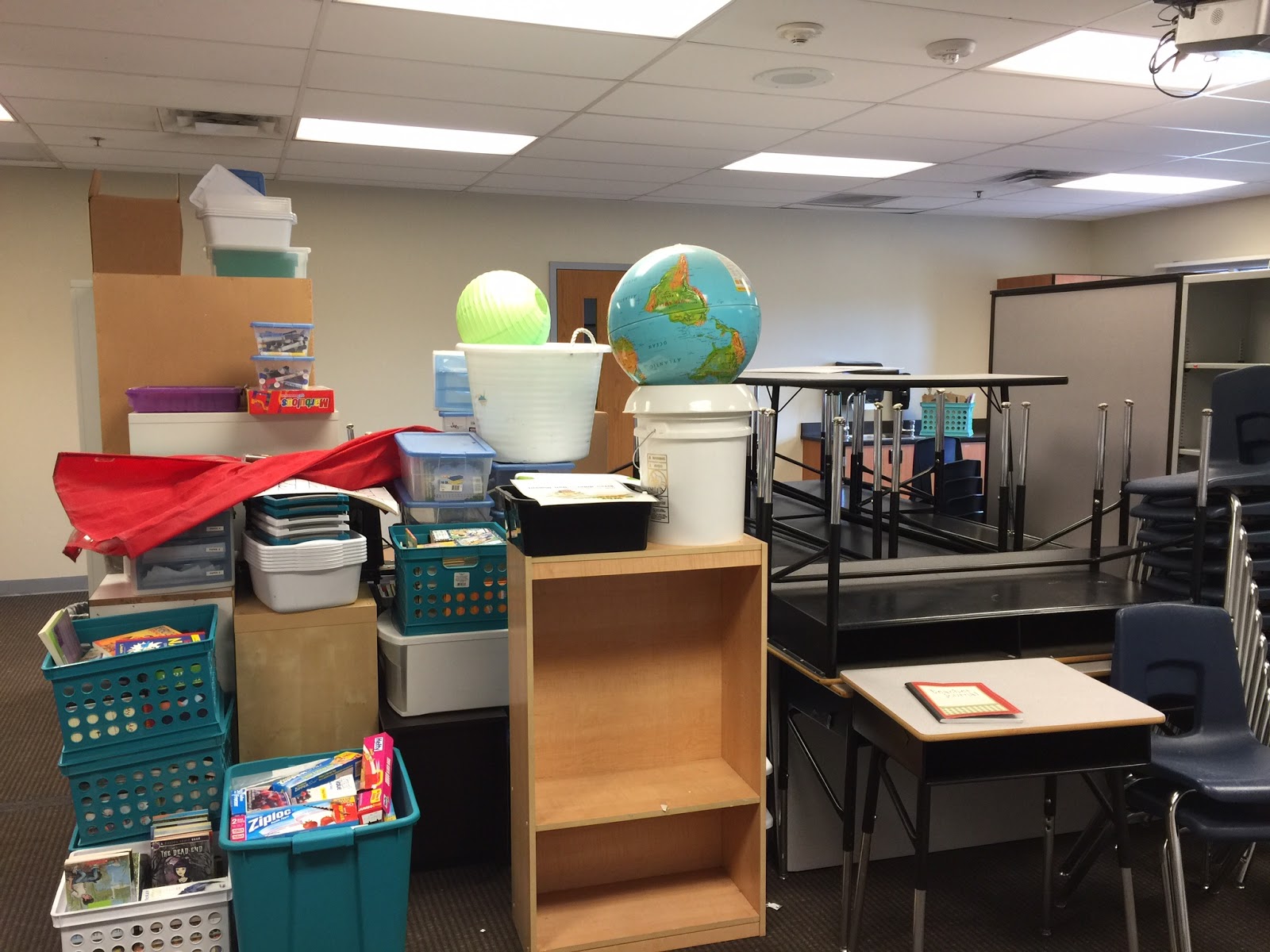
My teammate wanted to leave literally 10 minutes after students left on Thursday, so she was really hassling me about getting my things in her room moved to the center of the room- she and I didn't really get along well this last year so neither one of us was being very nice at this point. I told her I would get things done but I couldn't do it while I still had students in MY classroom. So, she moved everything to the center of the room for me. Well, when I came in yesterday this is what it looked like.
Not too bad, right? I mean, nothing was where I would put it and she just shoved everything in the center but I can work with that... until I noticed the horseshoe table. My first task was to get all the big furniture in the correct spots- I have several bookshelves that I needed to decide where to place and I needed to decide upon a meeting area and where to put my small group horseshoe table. So, furniture placement was my first priority.
There weren't a lot of people at school yesterday and no custodial staff nearby, so I was on my own with this.
First of all, how in the heck did she get this UP on top of the desks and WHY? I have to say I didn't have too many nice words to say about my ex-teammate at this point. But, I was determined to get it off of those desks by myself...
And, I only dropped one of those double desks (and not on my foot)... So once I got this down, I decide to put it in the corner of the room. Although I think the flag is really going to bother me there right above my head.
But, of course, the table is filthy! It has dried glue all over it and I have to scrape it today...not happy with old teammate. She also took the cubbies with her (even though she has them in her new room and traded my nice clean metal bookshelf for one that has old labels that are stuck on really badly).
Anyway, that was my adventure for the day. Here's what it looks like now after about 3 hours of work. No where near done- but that's why I am at school 20 days before it starts...
But, I did do one cute thing today. I put up my learning target board where I have to write the objectives...
Subscribe to:
Posts (Atom)